Cow Racing - Karapan Sapi

Racing Cow in Madura
Karapan sapi  is a cow ( sapi )  race that came from Madura, East Java, for most of the Madurese karapan sapi is not just a party of the people or events held each year which are inherited from generation to generation. In this race, a pair of cow interesting sort of wooden trains (where the jockey standing and controlling the cow pair) driven in the race couples race against other cows. But karapan sapi  for the Madura is a symbol of prestige that can raise the dignity of the Madurese, because cows are used to match a very good quality beef course with preferential treatment anyway. 
Madura Island is not only known as a producer of salt, but also producing quality cow  is very good race. Not infrequently the owner prepare cow   by providing special massages and meals are not less than 80 eggs every day, so stamina and strength is maintained  . Even preferential treatment is in some beef cattle that adorn the house appears there is not a vehicle car garage but even the cow that was digarasi home. Understandably due to the cow who won the game could reach Rp 75juta per tail. 
In celebration karapan this cow, cattle owners pride at stake. If they can win the game, in addition to prize money gained from betting too often rewards they get. If merkea lose in this match, self-esteem and their owners fell out money that does little to karapan this cow. Because cow treatment before the game is expensive, and usually they hire shamans to keep the cows survived the attack spell - spell their enemies.Big celebration was held a cow karapan times a year, but to get to the finals must meet several stages first. There are two kinds of celebrations karapan dimadura cow, the first is the President Cup and the Regent Cup. To Regent cup usually held 2x a year, the winners of this cup regents will usually continue the game to the President of the cup, for the moment a good photographer is at the regent cup. Because the cup is usually held regent suburban, the dividing line is only made of woven bamboo that make this event more traditional, but the safety factor Regent Cup karapan cow is very less so be careful at the moment to take photos. Lively after regents cup is the President Cup, the event was very lively and crowded. Since most who follow the President Cup this usually is the winner at the Regent Cup, the event was held in the city of Bangkalan and celebrations between September or October. 
In the event karapan cow the audience not only treated cows and agility racing the jockey, but before the start of the owners usually do the ritual procession of cows accompanied disekelilingi race seronen musical blend of musical instruments typical Madurese making this event a more festive. 
The length of the route path karapan cow between 180 to 200 meters, which can be completed within 14 to 18 seconds. Certainly a very fast pace cow - the cow, but sometimes bamboo shrewdness jockey who used to tread the jockey floating in the air due to the rapid speed of the beef cow. To gain speed and increase the rate of the cow the jockey, the base of the cows that are fitted with a belt full of sharp spikes which flicked his whip and the jockey who was also given a cow's rump towards sharp thorns. Of course these cuts will make the cows run faster, but also cause sores around the cow's ass. After playing the cow was given some time to heal the wound, but the cow is dipertandingan dikarapan is only 2 to 3 x only and should not be given the game more. 


Proximity winners sometimes the difference is very thin, indeed, they often only within 1 to 2 seconds, and this sometimes makes the losers protested. But they are given the opportunity to compete again with the losers, and a happy moment for the winners. In addition to their gift, usually bet jg gifts they get. In addition to winning cattle prices could soar price. 
Karapan Sapi  is a very unique show, in addition to already inherited one generation to the tradition is also preserved until now. These events serve as a tourism event in Indonesia, and not only local tourists from abroad too many who witnessed this cow karapan. Hopefully in the future more festive and event betting that adorn the cow karapan be lost.

Mount Tangkuban Perahu


Mount Tangkuban Perahu is located approximately 30 km north of the city of Bandung. This beautiful place is located in Lembang, approximately 30 minutes from Bandung using  a Car  . It  has an altitude as high as 2084 meters. The mountain is one of the attractive tourist destination in West Java. Natural environment is cool, and hot springs at the foot of the mountain-foot. . Tangkuban Perahu  named because its shape resembles an inverted ship. 

crater


 Tangkuban Perahu  name itself is very sticky with a legend who is very famous Sundanese land, namely Sangkuriang. Mount Tangkuban perahu  from a distance looks like an upturned boat, supposedly caused by a failed magic Sangkuriang finish the job in making the boat overnight to marry Dayang Sumbi is none other than his own mother. Because so upset can not complete construction of the boat, finally Sangkuriang kicked the boat that has not been finished. Legend who became a close link in the naming of the mountain Tangkuban Perahu.

track to crater


Tangkuban  Perahu mountain charm of this ship is so awesome, even, when the weather is sunny, the curve of the soil on the crater walls can be seen clearly, in stark contrast with the green trees around the volcano. Not only that, the bottom of the crater can we enjoy the beauty that is very admirable. Natural beauty is what makes the  Tangkuban  perahu become one of the natural attractions mainstay of West Java, especially Jakarta. 

sources of sulfur


The road to Tangkuban Perahu , the right frame on the road you will see the green carpet of tea gardens and rows of pine trees. His name is also the mountain, it is definitely really cool air at all times. Because Tangkuban Perahu  Mount  is still active today, it has always been a lot happening eruption that left the rest of the crater of eruption. Currently craters has been used as a Tourism place .  Ratu Crater, among others, Upas, Domas, New, Jurig, Rhino, Jurian, Demon and Pangguyungan Rhino. Among these craters, Ratu Crater  is the largest crater, followed by Upas Crater crater that is located adjacent to the Queen. Some crater sulfur smell smoke, there is even prohibited to descend the crater, because the smell of toxic smoke. 


If you are visiting Bandung, take your time to visit Tangkuban perahu. Cool weather, beautiful scenery, everything will make you satisfied. Visiting Tangkuban perahu means you have to enjoy the natural attractions, Lagenda, as well as shopping. Because in this mountain region we encountered a lot of merchants that sell a variety of sauvenir, food, etc.. On the lip of the crater of this mountain you can also walk around with a rented horse riding, all of which will increase the satisfaction you travel. Come and Enjoy ..!!!
viewed from a distance


Taman Safari Indonesia


At the Taman Safari Indonesia, you can watch thousands of animals are left free as their natural habitat. Most animals are not at home so you can see it more closely. By using the vehicle, your route will be down for a closer look at wildlife in Taman Safari Indonesia or derived from endangered species abroad. Plus the cool mountain atmosphere, beautiful scenery, a variety of games and performances attract an animal attractions for you to enjoy along with the baby.

 
Taman Safari Indonesia
Taman Safari Indonesia in 3 locations. The first was in Cisarua, Bogor, West Java. Second in Tretes, East Java. And the third location is in Bali. Of the three locations, at a first location founding Cisarua Safari Park in Indonesia.
For those of you who live in Jakarta, visiting the Safari Park in Cisarua may be an option. This is because the peak has become a favorite recreation spot for the people of Jakarta because it was not too far, approximately 80 km from Jakarta and can be completed within 1-2 hours if the streets are not jammed.
There are enough clues along the way to Taman Safari starts motorway exit that can ease you into this location. The location of the peak Cisarua was not until the mountain pass of Pangrango. From the highway to the summit, you will find instructions Safari Park entrance which is on the right.
Turning to the right toward the gate, uphill road to take. Along this road there are several hotels that can be an option if you want to spend the night in this area. You will also find merchants carrots, bananas, or vegetables in this way. Carrots and vegetables you can buy to feed the animals at the Safari Park. For the carrot prices range from Rp 10,000, - to 4 tie. There is also a roasted corn vendor that can prop your stomach from hunger and cold.
A gate that resembles an elephant tusk indicates that you were almost at the entrance ticket booth. Safari park admission price Rp 75.000, - for adults, to ticket a car, you have to pay Rp 15,000, -. As for penjung or foreign tourists, the price of admission 2-fold. This price is valid every day, regardless of weekday (weekdays) or weekend (weekends). You will get a map that contains the locations and places that exist in this recreation parks, animal attractions of the show schedule is also the route you will pass the order along with whatever animals you'll meet. We recommend that you save this map to help you find that you want to visit.


Various Animals
Entering the animal area, you have to go through the street with grass and trees on both sides of the road. In the first part, you will be greeted by a zebra. Uniquely colored black and white horse will be asking for food and they love to stick his head into the window of your car. On the tame animals, you can open the glass and give food to them. Some animals will "force" you gave me food by standing in front of your car. However, this usually does not last long because there are handlers who keep in some place that will lead them.
In parts of wild animals such as leopards, tigers, lions and bears no automatic gate that will open when the car is about to pass. You may feel a little tense when entering the area of ​​wild animals. In the tiger and the lion made to resemble the rubble. They are usually happy to be at the top while observing the area around. In the bear, we can see the big bears are sleeping or playing a game.

Area Games and Shows
Exit routes to see animals that are made feasible as its original habitat, there are many other rides that you can enjoy at this recreation area. Some toys that use machines such as "Mini Kora-Kora", "Jet Coaster", "Spinning Boat" and other rides can be tried. Only, to enjoy the sport you have to pay Rp 10.000, - for each game.

Safari Water Park
For those of you who like to swim, you can try to swim in Safari Water Park. What is unique from the swimming here is you can feel the sensation of swimming with alligators. Of course, not directly because there is separation between the swimming pool with crocodiles. You can try to slide a challenging climb and felt the cold mountain water that fills this pool.

Show
Various animal attractions you can watch it for free. There are elephant, tiger, various animals, birds, dolphins and sea lions, circus or cowboy. Performances take place 2-3 times a day. At this attraction, you can see how smart these animals and their behavior that invites laughter. For instance, a cute orangutan behavior or how smart elephants that can paint.
All the attractions of the animals have stories that educate, generally themed so that does not destroy the environment that may affect animals and humans can harm themselves. At the end of the show, you can take pictures with animals beratraksi. While the attractions of the tiger, you can take pictures with the white tiger that is large enough. To take pictures with the tiger, you have to pay Rp 10,000, - if the photos alone or Rp 25,000, - if more than one person.

Baby Zoo
Baby ZooWahana area is visited by many Baby Zoo. At the front of the Baby Zoo, kids can try to ride a pony, small horse with bangs at the top of his head to make this horse looks adorable.
Called Baby Zoo, because in it there is a child of the animals. Entering the Baby Zoo, you will find kudanil child who will open his mouth to eat demanded. You can touch it while feeding. There is also a kind of primate with a large size that will raise your hand for the meal in addition to this kudanil child.
Log into the deeper parts, there are buildings like the Taj Mahal made in India. With walls and boundary nodes is limited, you can meihat white tiger is interesting from the area Baby Zoo is you can take pictures with animals that are generally still a child. This is what led to this area called Baby Zoo. By paying Rp 10.000, - per person for each photo, you can choose to take pictures with young lions, leopards child, a baby orangutan, tiger cubs white or Sumatran tiger is large enough. Photos taken using your camera because the private Safari Park does not provide a camera or photographer. With guarded by the handler, you are not assisted to assume or hold the animals. It was quite fun, because this experience is hard to find where you can hold the beast and record it in the photo.
Baby Zoo is still in the area, you can see the collection of birds which consists of various types in the Bird Aviary. A dome is home to more than 1000 birds and consists of 90 species of birds so you can freely admire the variety of birds that fly freely. You can also see kangaroos in the region.

Penguin
One of the unique animals into a collection of Cisarua Safari Park, Bogor and you rarely find anywhere else is a collection of penguins. There is a special pool where the water is made to resemble the temperature of the water where penguins live it. You can see the funny thing was swimming in the pool by entering into a building that resembles a igloo, Eskimo house made of ice. Here, you can also see who goes with cute penguins on the pond. Penguins usually live in groups, when there is a swimming penguin, a group of penguins will go swimming. So also when there are penguins who ride, a group of penguins will rise from the pool. Not far from the penguins, you can see the dragon and the crocodile enclosure.


Vehicle Tour
For you who wish around this area but was feeling tired, there are cars made like a train to take you around the Safari Park area. There are several counters and bus stops to buy a ticket for Rp 10.000, - as a place to ride these vehicles. There are also "Sky Lift" (cable car) so you can see the entire region from a height.
You can also try to ride an elephant through the jungle at Taman Safari with "Elephant Trail". Accompanied by the handler, you can ride elephants through the forest and the river will and you are free to enjoy the natural thick in this area.

Attorney Waterfall
At the top of the Safari Park, Water Falls attorney there who can bring sanity itself for those who visit it. Similarly there are many restaurants and souvenir shops that sell stuffed animals, T-shirts or other souvenirs that can be a keepsake you in this place. Garden Tour will be seen starting at 17:00 pm quiet hours of operation due to the Safari Park is a tourist area ranging from 09.00 - 17.00 hrs.

Safari Trek
To enjoy the tour at the Safari Park, there are several options you can try other than seeing an animal with a vehicle in the morning until late afternoon. For those of you who enjoy exercising, there is a pedestrian pathway to see the animals from the top of the Safari Trek. Accompanied by a guide, you will be walking the streets of paths are not smooth. On Safari Trek route, you'll pass waterfalls and can try the courage to try flying foxes, rope climbing and other games. Safari Trek will feel refreshing because it feels without exercise while you are filling your lungs with clean air in the mountains.


Night Safari
If you want to feel a different atmosphere, Night Safari can be an option. Night safari starts from 19.00 am and are held only on weekends (weekends). You can see the animal life at night.

 
Lodging
Safari Park also provides a place to stay. Place of accommodation in the form of wooden bungalows with some rooms or stay in the trailer (caravan). All are in an environment of lush mountains and quiet. Facilities like swimming pool, restaurant, karaoke and meeting rooms available to meet your needs.
Try to visit Taman Safari Indonesia in Cisarua as many performances and exciting games that can be enjoyed. This place will be particularly favored children who love watching animal behavior plus you can invite them to interact directly with the animals in the Baby Zoo. This will be a new experience for the children in the Safari Park.

Malioboro Yogyakarta

By Pangandarantrip and  KLM offering incredible low prices to Europe and beyond. Book now


Malioboro Road
 Extends over the imaginary axis connecting the sultan's palace, monument and the peak of Mount Merapi, the road is formed into a trading locality after Sri Sultan Hamengkubuwono I developed a means of trading through a traditional market since 1758. After 248 years passed, the place still survive as a commercial area even became one of the icons of Yogyakarta is known as Malioboro.Located about 800 meters from the Sultan's Palace, this place was once filled with a bouquet of flowers every time you execute the Palace celebrations. Malioboro, which in Sanskrit means "garland" the basis for naming the street.Flanked by shops, offices, restaurants, hotels and historic buildings, streets that were once the struggle had become the base when the Dutch military aggression to-2 in 1948 had also been a land of wandering the artists who are members of the community Persada Studies Club (PSK) led artists Landu Paranggi pennant since the 1970's until about 1990.

Paradise Souvenirs 

souvenir

Batik


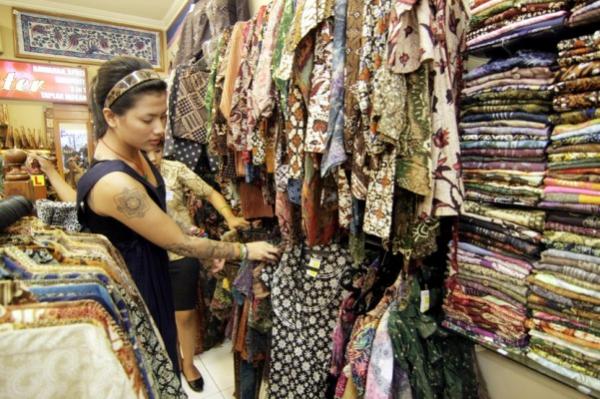
Enjoy the shopping experience, hunting souvenirs of Jogja, tourists can walk along the shoulder of the road corridor (arcade). Here you will find many vendors who hold merchandise. Ranging from local handicrafts such as batik, rattan ornament, leather puppets, bamboo handicrafts (key chains, decorative lamps, etc.) also blangkon (hat typical Java / Yogyakarta) and silver goods, to merchants who sell a lot of knick knacks general found in other trading places. Along the arcade, tourists can shop in peace in a sunny or rainy conditions, also can enjoy a pleasant shopping experience at bargain prices. If lucky, can be reduced by one third or even half.Do not forget to leave little energy. There is still a traditional market that should be visited. In the place known as Beringharjo market, but tourists can find similar goods are sold along the arcade, this market provides a variety of traditional products is more complete. In addition to local products Yogyakarta, also available product neighboring areas such as Pekalongan batik or batik Solo. Looking for batik or batik prints, or just looking for decorating the window curtains with unique motifs and batik bed sheets beautiful. This place will satisfy your shopping desires unique items with a cheaper price.Shopping in the area of ​​Malioboro and Beringharjo, be sure not to be fooled by the price offered. Usually the sellers to raise prices than usual for tourists.

Vredeburg and Gedung Agung (Great House)

Vredeburg Fort
 At the end of the road "bouquet", tourists can stop at Vredeburg that dealing with the Great House. This fort was once the basis of protection from possible attack Dutch troops Palace. As usual every fortress, a place that was built in 1765 this square-shaped high wall encircling the area in which the monitors at the four corners of the tower used as a patrol. From the south tower, Pangandarantrip time to enjoy views over the Palace of the Sultanate of Yogyakarta and several other historical buildings.


Great House


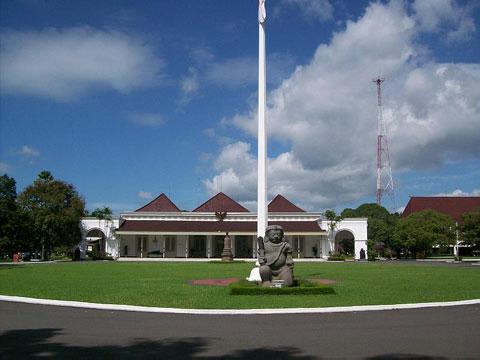
While the Great House is located in front of him had been the residence of the Head of the Dutch colonial administration from 1946 until 1949. In addition he became the Presidential Palace during Sukarno's presidency when the State Capital was moved to Yogyakarta.

Lesehan Malioboro 


Lesehan

As the sun began to set, when the street lights came on and the shops that add beautiful ambience Malioboro, one by one lesehan shanties sprung. Food of Jogja such as warm or pecel catfish can be enjoyed here in addition to oriental cuisine or sea food and cuisine of Padang. Entertainment as well as hits or memorable song by the other street when dining.For tourists who want to taste the cuisine along the way Malioboro, ask for price list and make sure the seller, to avoid rising prices are not reasonable.Visiting Yogyakarta is known as the "Living Museum Javanese Culture", feels incomplete without a stop at the road that has kept many stories of struggle of Indonesian history and filled with a variety of souvenirs. A paradise for lovers of history and souvenir hunters.
Gudeg Yogyakarta


Places of Interest (radius of 1 km from Malioboro)
   
HOTEL BHINNEKA (0.5 km)
    HOTEL PETI MAS (0.3 km)
    PACTO (0.3 km)
    GREAT TOUR (0.3 km)
    PASAR BERINGHARJO (0.6 km)
    SOSROWIJAYAN (0.3 km)
    SOSROKUSUMAN (0.1 km)
    ANGKRINGAN LIK MAN (0.5 km)
    STASIUN TUGU (0.5 km)
    PABRIK TEGEL KUNCI (1.1 km)
    NASI GORENG BERINGHARJO (0.9 km)
    PECINAN (0.5 km)
    LOJI (1 km)
    KOTABARU (1.2 km)
    BLUE EARTH (0.9 km)
    BIOSKOP PERMATA (1.3 km)
    HOTEL KRISTINA (0.4 km)
    BARUMUN MONEY CHANGER (0.3 km)
    ABADI HOTEL JOGJA (0.4 km)
    SAKANTI CITY HOTEL (0.7 km)
    THE SRIKANDI HOTEL (1 km)
    TAMAN PINTAR YOGYAKARTA (0.9 km)
    HOTEL 1001 MALAM (0.3 km)
    RUMAH BOEDI PAVILION (0.7 km)
    TEGAL PANGGUNG GUEST HOUSE (0.6 km)
    HOTEL JENTRA DAGEN (0.4 km)
    HOTEL BATIK YOGYAKARTA (0.2 km)
    BALUMBA TOURS (0.2 km)
    PESTA PERAK RESTAURANT (1.1 km)
    LEGIAN GARDEN RESTAURANT (0 km)

Where to Go (radius 5 km dari MALIOBORO)

    TAMANSARI (2 km)
    KOTAGEDE (5.4 km)
    SASANA WIRATAMA (1.7 km)
    MUSEUM SASMITALOKA (1.5 km)
    MONUMEN JOGJA KEMBALI (MONJALI) (4.8 km)
    KRATON YOGYAKARTA (1.5 km)
    KAMPUNG KAUMAN (1.3 km)
    MASJID KOTAGEDE (5.4 km)
    DUSUN MLANGI (5.2 km)
    PASAR BERINGHARJO (0.6 km)
    SOSROWIJAYAN (0.3 km)
    SOSROKUSUMAN (0.1 km)
    PRAWIROTAMAN (3 km)
    TERMINAL GIWANGAN (5.4 km)
    STASIUN TUGU (0.5 km)
    PABRIK TEGEL KUNCI (1.1 km)
    PABRIK GULA MADUKISMO (4.6 km)
    PECINAN (0.5 km)
    MUSEUM AFFANDI (3.5 km)
    LOJI (1 km)
    KOTABARU (1.2 km)
    BINTARAN (1.5 km)
    KAMPUNG SERANGAN (1.6 km)
    MUSEUM SONOBUDOYO (1.1 km)
    TUGU JOGJA (1.1 km)
    SELOKAN MATARAM (3.3 km)
    PANGGUNG KRAPYAK (3.9 km)
    WARUNGBOTO (3.6 km)
    BIOSKOP PERMATA (1.3 km)
    TAMAN PINTAR YOGYAKARTA (0.9 km)

Kampung Naga in Tasikmalaya

By Pangandarantrip and  KLM offering incredible low prices to Europe and beyond. Book now


 Kampung Naga is a traditional village with a total area of ​​approximately 4 ha. Location tourist attraction located at Kampung Naga road that connects Tasikmalaya - Bandung through Garut, which is approximately 30 kilometers to the west toward the town of Tasikmalaya.Kampung Naga inhabited by a group of people who are very strong in the customs holding relics of his ancestors. It will be obvious differences when compared with other communities outside of Kampung Naga. Kampung Naga community living in an institution that is conditioned in an atmosphere of simplicity and traditional wisdom inherent environment.

Administratively Kampung Naga villages including Dage Legok Neglasari Salawu Sub District Tasikmalaya.Mileage of Tasikmalaya to Kampung Naga  about 30 kilometers, while from Garut about 26 kilometers away.

To get to Kampung Naga from the Road Garut -Tasikmalaya  should down the stairs that have been walled (Sunda sengked) up to the edge of the river Ciwulan with a slope of about 45 degrees with a distance of approximately 500 meters. Then through the path along the river Ciwulan up into the Kampung Naga. According to data from Neglasari, the surface shape of the land in Kampung Naga hills with fertile soil productivity can be said.Kampung Naga land area that is an area of ​​one acre and a half, mostly used for housing, yards, pools, and the rest is used for farming rice fields are harvested twice a year.The appeal of Kampung Naga attractions lies in the unique life of the community is located in Kampung Naga. Their lives can blend in with modern society, are Muslims, but still maintain both strong Customs of his ancestors. Like many traditional ceremonies, ceremonies besr days of Islam such as ceremonies or Alif Mulud months by implementing Pedaran (reading History Ancestors) The process begins by bathing in the River Ciwulan and Travellers should follow the event with the condition that they abide by the rules there.Shape of the building in Kampung Naga is equally good houses, mosques, Patemon (meeting hall) and rice. The roof was made of sago palm leaves, palm leaves, or as a cover injuk bumbungan. The walls of houses and other buildings, made of woven bamboo (cubicle). Meanwhile the building doors are made of rattan fibers and all the buildings facing North or South. Also a neat pile of stones with the layout and natural ingredients are the hallmark of architecture and ornament because Naga village.This tourist attraction is one of the cultural attractions in Tasikmlaya Travelers usually have a special interest that wants to know and prove the real state of proficiency level. Development of Kampung Naga attractions including the development of short-term outreach.

  History / origin of Kampung Naga according to one version begins at the time of his status as guardian Sheikh Sharif Hidayatullah or Sunan Gunung Jati, a servant named Singaparana tasked to spread Islam to the west. Then he got to the area which is now Neglasari Neglasari, District Salawu, Tasikmalaya District. In these places, Singaparana by society Kampung Naga is called Worship Dalem Singaparana. One day he got ilapat or user should be meditated. In persemediannya Singaparana aright, that he should occupy a place which is now called Kampung Naga.
Kampung Naga ancestors of the most influential and contribute to society Kampung Naga "Sa Dragon" is Grandmother Singaparana or Worship Dalem Singaparana called again with Eyang Galunggung, buried in the west Kampung Naga. The tomb is regarded by society Kampung Naga as always diziarahi shrine at ceremonies held for all descendants.But when Grandmother died Singaparana, no definitive data obtained nobody even knows of Kampung Naga. According to the belief that they inherited from generation to generation, society Kampung Naga ancestors did not die but disappeared without leaving the body. And that's where society Kampung Naga regard it as a tomb, by providing signs or clues to the descendants of Kampung Naga Society.

There are a number of names of the ancestors are venerated Kampung Naga society such as: Prince Kudratullah, buried in Gadog Garut, a highly regarded master of Islamic knowledge. Raden clumsy Katalayah Nu Lencing The Seda Sakti, is buried in Taraju, District of mengusai science Tasikmalaya immunity "kewedukan". Queen Ineng Kudratullah or called Grandmother Mudik Batara Coral, buried in Karangnunggal, Tasikmalaya District, mastered the science of physical force "kabedasan". Mangkubawang Prince, is buried in Mataram Yogyakarta mastered the science of intelligence that is kedunawian or wealth. Gunungjati Sunan Kalijaga, buried in Cirebon mastered the science of agriculture.

Book your Vacation package with CheapOair and Save up to 65%. Use coupon code VP50 and get $50 off. Hurry!

Komodo


By Pangandarantrip and KLM offering incredible low prices to Europe and beyond. Book now  

komodo dragon

 Komodo or  Komodo dragons (Varanus komodoensis, is the world's largest lizard species that live on the island of Komodo, Rinca, Flores, Gili Motang, and Gili Dasami in Nusa Tenggara. Biawak by the natives of Komodo island is also known by the name of the local ora.

Including family members Varanidae Lizard and klad Toxicofera, dragons are the largest lizards in the world, with an average length of 2-3 m. Large size is associated with symptoms of gigantism that is the body's tendency to enlargement of certain animals that live on this small island linked to the absence of carnivorous mammals in the island where dragons live, and the rate of metabolism of small dragons. Because of her size, these lizards occupy the position of a top predator that dominate the ecosystems in which they live.

Komodo dragons are found by western researchers in 1910. He was a great and terrible reputation that makes them popular in zoos. Dragons in the wild habitat has been shrinking due to human activity and therefore incorporate dragons IUCN as a species vulnerable to extinction. This large lizard is now protected under Indonesian law and a national park, the Komodo National Park, established to protect them.

Anatomy dan Morfology

In the wild, adult Komodo dragon usually has a mass of about 70 kilograms, but the dragons kept in captivity often have a greater body weight. Wild specimens have the largest ever of 3:13 meters long and weighing about 166 kilograms, including the weight of undigested food in his stomach. Although listed as the largest lizard the Komodo dragon is still alive, but not the longest. This reputation is held by Papuan lizard (Varanus salvadorii).

Komodo has the same tail length with his body, and around 60 sharp teeth are serrated along approximately 2.5 cm, which is often replaced. Komodo dragon saliva is often mixed with a little blood because her teeth almost completely covered by gingival tissue and the tissue was torn during the meal. This condition creates an ideal environment for the growth of deadly bacteria that live in their mouths. Komodo has a long tongue, yellow and forked.

Komodo dragons males larger than females, with a skin color from dark gray to red brick, while the female is more colorful dragons green olives, and has a small piece of yellow on the throat. Young Komodo dragons more colorful, yellow, green and white on a black background.

Komodo dragon scales, some of which are reinforced with bone, has a sensor that is connected to nerves that facilitate excitatory touch. Scales around the ears, lips, chin, and soles of the feet have three or more sensor stimulation.

Komodo dragons were once considered deaf when studies find that whispers, voices rising and shouting did not result in agitation (interference) in the wild dragons. This was refuted later when employees ZSL London Zoo, Joan Proctor trained lizards to eat out with his voice, even when he is not seen by the lizards.
Biawak Komodo

Ecology and Behaviour

Komodo dragons are naturally found only in Indonesia, on the island of Komodo, Rinca and Flores and several other islands in Nusa Tenggara. Living in open dry grasslands, savannas and tropical forests at low altitude, this lizard loves hot and dry place. They are active during the day, although sometimes also active at night. Komodo is a solitary animal, gathered together only at meals and breed. These large reptiles can run fast up to 20 kilometers per hour at short distances; swim very well and can dive as deep as 4.5 meters; and clever climb trees using their powerful claws. To catch prey that are beyond its reach, the Komodo dragon may stand on its hind legs and uses its tail as a support. With increasing age, more dragons to use his claws as weapons, because of his large size made ​​it difficult to climb trees.


For shelter, dragons dig holes 1-3 meters wide with the front legs and strong claws. Because of her size and habit of sleeping in a hole, the Komodo dragon can maintain body heat during the night and reduce the time sunbathing on the next morning. Komodo generally hunt in the afternoon to evening, but still take shelter during the hottest part of the day. These places hidden dragons are usually located in the dunes or hills with the sea breeze, is open from vegetation, and here and there scattered dung inhabitants. This place is generally also a strategic location to ambush deer.
Komodo dragons are carnivores. Although they eat mostly carrion, studies show that they also hunt live prey by sneaking followed by a sudden attack against the victim. When prey arrives near a hidden dragons, animals are immediately attacked him on the bottom side of the body or throat. Komodo can find their prey using a keen sense of smell, which can be found dead or dying animals at a distance of up to 9.5 kilometers.These ancient reptiles eat by tearing large chunks of meat and then swallowed it round front legs while holding the body of its prey. For small-sized prey of up to goats, the meat could be spent in one gulp. Stomach contents of prey in the form of plants are usually left untouched. A reddish saliva and out in large quantities very helpful dragons in swallowing their prey. However, the ingestion remains a long time consuming; 15-20 minutes is required to swallow a goat. Komodo dragons are sometimes trying to accelerate the process of swallowing it by emphasizing the carrion prey into a tree, so that carcasses can be entered through his throat. And sometimes it's also cutting down the tree so hard that it becomes horizontal. To avoid so as not to choke when swallowing, dragons breathe through a small channel under the tongue, which relate directly to his lungs. [11] His jaws that can be developed freely, his skull is pliable and elastic stomach that can eat the wonderful allow dragons large prey, up by 80% their own body weight in one meal.After eating, a Komodo dragon glut dragged himself looking for the sun to bask and accelerate the process of digestion. If not, they can rot in his stomach and poison their own bodies. Due to a slow metabolism, large dragons can survive by just eating 12 times a year or approximately once a month. After the meat undigested prey, dragons spewing the remains of horns, hair and teeth prey, in clumps mingled with foul-smelling slime, which is known as gastric clot pellet. After that, dragons swept his face to the ground or into the bushes to clean up the remnants of mucus is still attached; behavior suggests that dragons, like humans, not like the smell of his own saliva.In the collection, most large-sized dragons usually eat first, followed by a smaller sized according to the hierarchy. Males showed the greatest body language and desisannya dominansinyamelalui; are greeted with the same language by other males are less likely to show its recognition of that power. Komodo dragons are the same size, may be fighting pitted forces, such gulatbiawak way, until one of them to admit defeat and retreat; although sometimes the loser can be killed in a fight and devoured by the victor. Komodo dragons prey extremely varied, covering a variety of invertebrates, other reptiles (including smaller-bodied dragons), birds and their eggs, small mammals, monkeys, wild pigs, goats, deer, horses and buffalo. Young Komodo dragons prey on insects, eggs, lizards, and small mammals. Sometimes dragons are also prey on humans and the bodies were excavated from the tomb of a shallow hole. This habit causes the population of the island of Komodo avoid sandy soil and chose to bury the corpse in clay, and covered it with stones so as not to be excavated dragons. Others have guessed that the Komodo dragon evolved to prey on pygmy elephant Stegodon that once lived on Flores. Komodo also been observed when the shock and scare the deer females who were pregnant, with the expectation that a miscarriage and the fetus can be eaten carcass; a behavior which is also found in large predators in Africa.Having no midriff, dragons can not breathe in water or licking water to drink (like cats). Instead, the dragons 'scooped' the water with the rest of his mouth, then raised his head so that water flowing into the stomach 

.Venomous and Bacteria In late 2005, researchers from the University of Melbourne, Australia, concluded that Perentie lizard (Varanus giganteus) and other lizards, lizards, and lizards from the tribe Agamidae, probably have some sort of can. As long as it is known that the wounds caused by bites of these animals are very prone infeksikarena presence of bacteria that live in the mouth of these lizards, but the researchers suggest that the direct effect that appears at the bite wounds were caused by the entry of medium magnitude could . These researchers have observed the wounds in the hands of humans from the bite of lizard Varanus varius, V. scalaris and dragons, and all showed a similar reaction: rapid swelling within minutes, localized disruption of blood clotting, the pain that gripped up to the elbow, with some symptoms that last up to several hours later.Beside venomous , the Komodo dragon saliva also has a variety of deadly bacteria in it, more than 28 Gram-negative and 29 Gram-positive have been isolated from saliva. These bacteria cause septikemiapada victims; if not directly kill the dragons bite their prey and prey that can escape this pesky generally prey will die within one week of infection. The most deadly bacteria in Komodo dragon saliva appears to be the bacterium Pasteurella multocida is very deadly; known through experiments with laboratory mice. Because the Komodo dragon appears immune to its own microbes, much research was done to look for the hope of antibacterial molecules can be used for human treatment.

Reproduction
 Breeding season occurs between May and August, and dragons eggs laid in September. During this period, male dragons battle to defend the females and territory by way of "grappling" with other males while standing on his hind legs. Komodo dragons are defeated will fall and "locked" to the ground. Both the male dragons can vomit or defecate when preparing for battle. The winner will fight long tongue flicking on the female body to see the acceptance of the female.Antagonistic female Komodo dragons and fight with their teeth and claws in pairs during the initial phase. Furthermore, the male must fully control the female during intercourse so as not to hurt. Other behaviors shown during this process is the male rubbing their chins on the female, scratching hard on your back and lick. Copulation occurs when males enter one hemipenisnya to the female cloaca. Komodo can be monogamus and form a "pair," a trait that is rare for the lizard.Females will lay their eggs on the ground hole, climbing a hill or mound scrape nests burnt-orange legs that have been abandoned. Komodo dragons prefer to keep their eggs in nests that have been abandoned. A Komodo dragon nests an average of 20 eggs which will hatch after 7-8 months. Females lay on the eggs to incubate and protect them until they hatch in about April, at the end of the rainy season when there are so many insects.


The hatching process is exhausting effort for children dragons, which came out of the eggshell after tearing with teeth teluryang be dated after the heavy work is completed. After a successful skin tore eggs, baby dragons can lay their eggs in the shell for a few hours before starting to dig out their nests. When hatched, the babies are not just how powerless and can be eaten by a predator.Young Komodo dragons spend his first years in the tree, where they are relatively safe from predators, including adult dragons are cannibals, which is approximately 10% of food is a young lizard-lizard who successfully hunted. Komodo takes three to five years to mature, and can live more than 50 years.In addition to the normal reproductive process, there are several examples of cases of female dragons to produce children without the presence of males (parthenogenesis), a phenomenon well known to appear in some other reptile species as in Cnemidophorus.


Fly and Stay Cheap with OneTravel.com - Book Now!